Turning the Tide
Harmful fishing practices are out of sight and out of mind for most people. Instead of leading with facts, the campaign focused on curiosity and connection – harnessing the humour and storytelling of popular content creators to draw people in. Once the audience was engaged, we revealed the reality underneath, and, crucially, led them to the next stage – signing Greenpeace’s vital petition for change.
Reaching beyond the usual audience
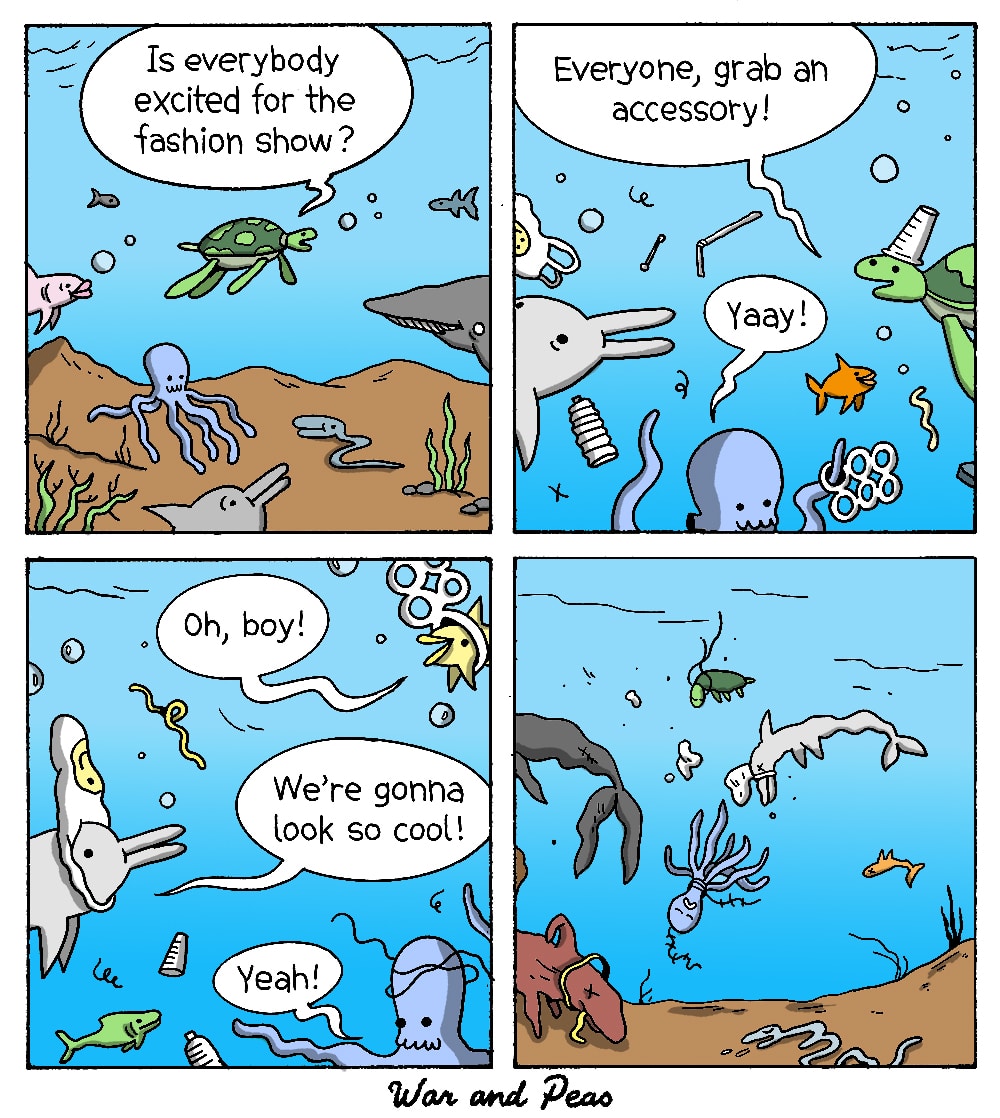
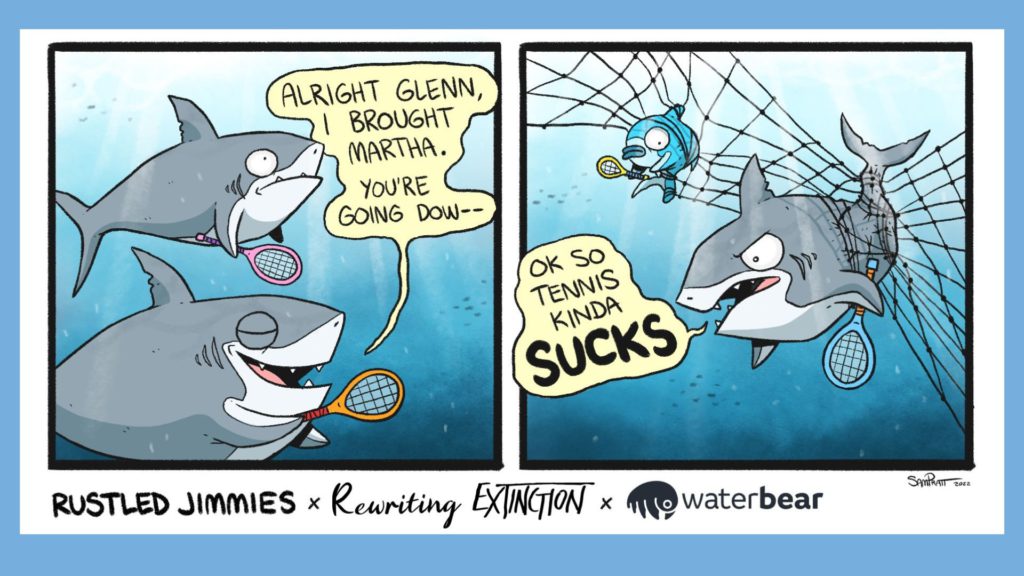
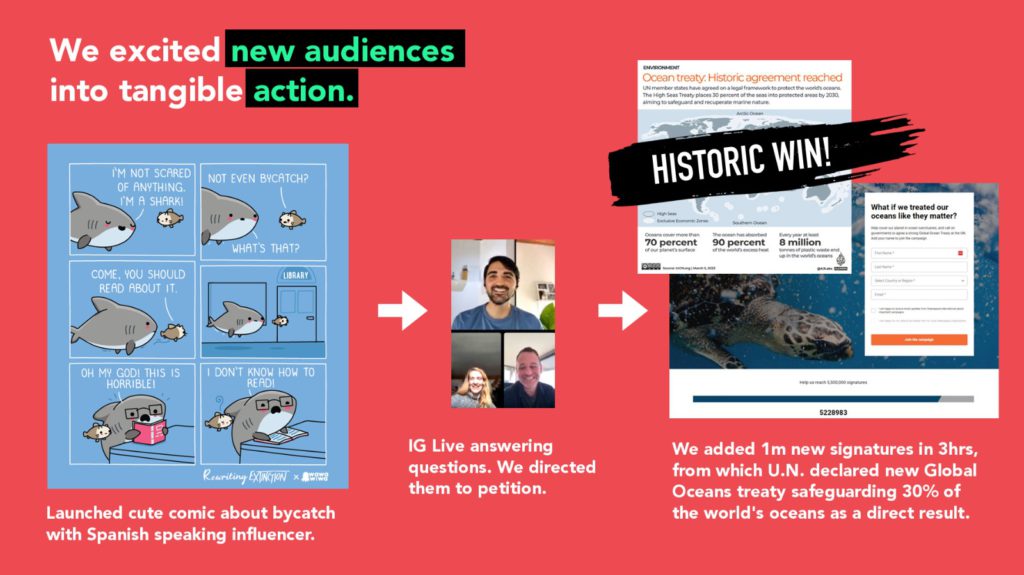
Rather than simply broadcasting a message, we aimed to make the issue instantly understandable without prior context. In order to break out of the echo chamber and land with a broader online audience, we collaborated on a series of immediately relevant, platform-native, easy-to-share comics.
The collaborations brought together entertainment and education in a way designed for how people actually engage online.
Going live
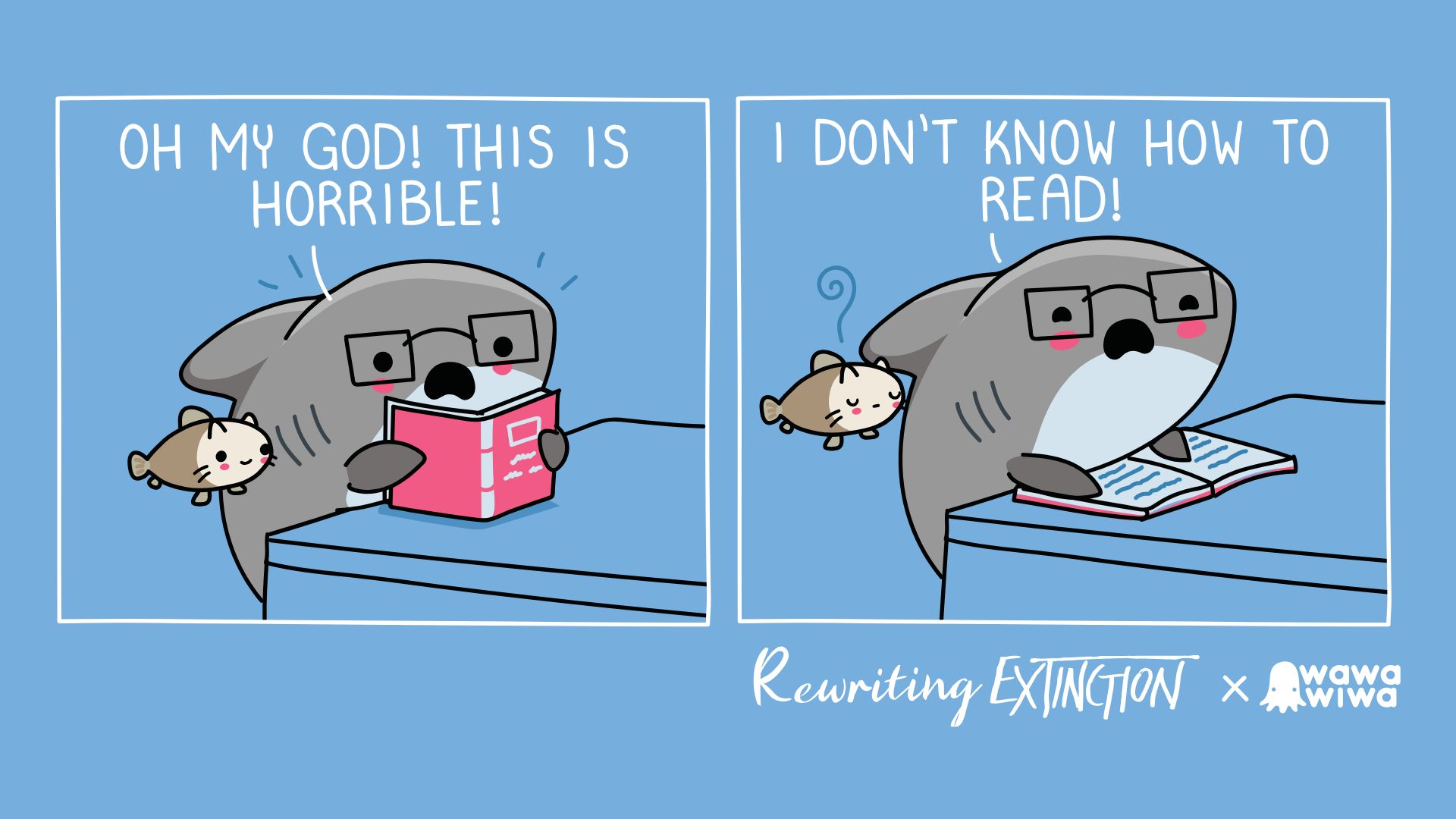
To achieve our goal of turning passive awareness into active engagement, we held a live social media event on Instagram alongside incredible creator Wawawiwa, where audiences could go deeper; engaging directly with the issues like damaged habitats and fish populations in real time.
This led to Greenpeace’s petition adding 1 million signatures in 3 hours, and a huge mandate for the UN’s historic Global Ocean Treaty.
“The Biggest Conservation Victory Ever”
“The Global Ocean Treaty has the power to change everything. For the first time, governments have a legal framework to create High Seas sanctuaries – vast protected areas outside of any country’s national waters, where fragile ecosystems can recover and thrive. If fully implemented, the Treaty could establish the largest network of ocean sanctuaries in history, covering over a third of our global oceans.” – Ariana Densham, Greenpeace